

This site is reader-supported. When you buy through our links, we sometimes earn a commission from the provider — at no extra cost to you. In fact, you'll often get an exclusive discount. These partnerships fund our independent work, but never shape our conclusions. Learn more
Why is this regulation happening now?
We see that the motives for making it difficult for eSIM providers are often still largely conservative and financial (as in Turkey). But in countries like Brazil, we see the government intervening for other reasons, primarily related to security and compliance. As a relatively young industry, eSIM companies have, until now, faced little regulation, but we fear this will increase.
This scrutiny is not entirely unprompted. On one hand, some providers route data through countries like China without the consumer’s knowledge, raising security concerns. On the other hand, some operators fail to take European consumer law seriously, particularly with vague ‘Fair Use Policies’ for “unlimited” data. They often hide behind local partners rather than taking responsibility for their own product.
Fortunately, we see a good level of transparency from major providers like Airalo, MobiMatter, Jetpac, Truely and Ubigi. It would be sensible for more providers to follow their lead before regulators force the issue.
Turkey
In some countries, local providers are smartly jumping on the eSIM trend. Take the DTAC eSIM in Thailand, which is easy to find online, or the Dutch SimWallet from local provider Odido.
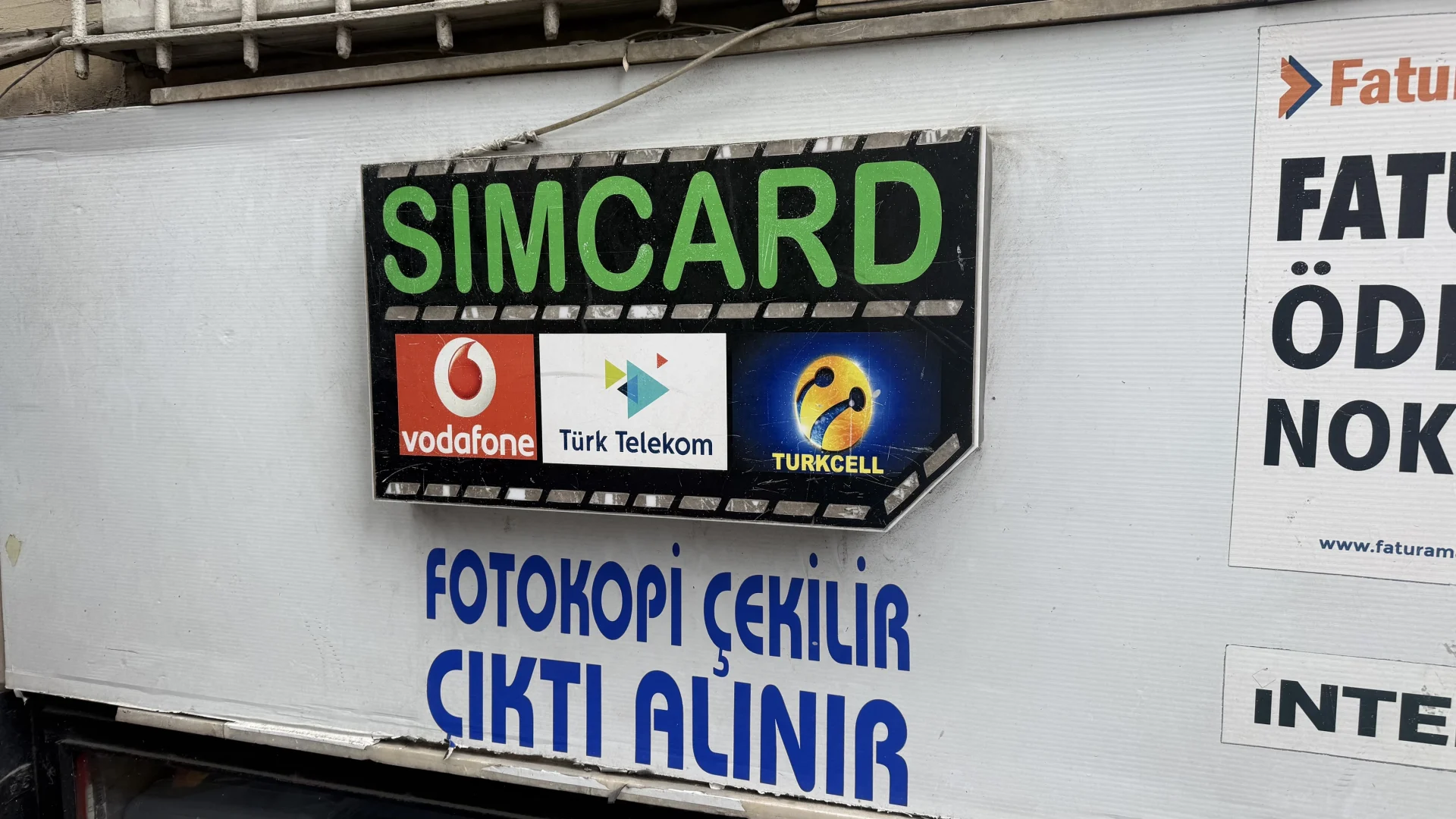
In Turkey, the reaction has been more defensive. Websites and apps of popular providers like Airalo, Holafly, and Ubigi are simply blocked from within Turkey, as we previously reported.
- What is the restriction? Websites and apps of popular eSIM providers are blocked.
- Why? Most likely to protect local providers from competition.
- What is the impact for travelers? If you are already in Turkey and don’t have an eSIM, your options are limited.
- Our Advice: Buy your eSIM before you depart, and importantly: install it before you travel. It will then work as expected.
If you are already in Turkey and do not have an eSIM yet, you can compare plans with our comparison tool. You will need to click through yourself to see which websites are still accessible, although in our experience the majority still work.
Russia
As we previously reported, travel eSIMs (and international SIM cards) do not work for the first 24 hours in Russia; specifically, you will have no internet access.
- What is the restriction? An international SIM card or eSIM (including travel eSIMs) only gains access to data 24 hours after registering on the network.
- Why? Security, for example, due to the war with Ukraine. This includes preventing drones from being controlled via eSIM data.
- What is the impact for travelers? This is significant. You will have no data for the first 24 hours, so you cannot book an online taxi, use maps, or use translation apps. Make sure you compensate for this by downloading or writing down all necessary information in advance.
- Our Advice: Download offline maps, pre-book transport, and use airport/hotel Wi-Fi. Do activate your eSIM directly on arrival, so the 24-hour counter starts.
Brazil
Tourists in Brazil may not notice much of this at the moment, but things could be about to change. If you want the greatest certainty that your eSIM will continue to work for your entire trip, we believe Airalo and Ubigi are currently your safest choices.
This year, the Brazilian telecom regulator (Anatel) made an important ruling. Brazil has declared that selling an eSIM service is now an official telecommunications activity that requires a license.
This is a major legal change. Many international travel eSIM providers operate in a legal ‘gray area’ and do not have this specific license. It is still unclear how Brazil will enforce this, especially for eSIMs bought outside the country. However, this creates a new risk for travelers: in theory, your eSIM could suddenly be disconnected during your trip if it’s from an unlicensed provider.
- What is the restriction? Selling travel eSIMs in Brazil now requires an official license.
- Why? To regulate the market and enforce local ID verification (KYC) laws.
- What is the impact for travelers? A new (currently low) risk that your eSIM could be disconnected if it’s from an unlicensed reseller.
- Our Advice: To be safe, we recommend choosing providers that are clearly following the rules. Companies like Ubigi (which is part of a large, established telecom company) are likely the most reliable options. You can use code
FYESIM10for10%off Ubigi. Please note: this is our analysis, not a guarantee.
India
In India, tourists will primarily notice eSIM rules because certain international eSIM apps and websites are blocked. In 2024, the Indian telecom authority ordered Apple and Google to remove providers like Airalo and Holafly from the Indian app stores and block their websites.
This doesn’t mean eSIMs for India are banned, but it does mean India is scrutinizing foreign providers more strictly. The main risk for travelers is that you may not be able to access a provider’s app or website once you are inside India, limiting your options.
- What is the restriction? The apps and websites of several major eSIM providers (e.g., Airalo, Holafly) are blocked within India.
- Why? Officially, because they offered services without proper authorization, which were reportedly being misused for fraud.
- What is the impact for travelers? You cannot download the app or purchase an eSIM from these providers after you have landed in India.
- Our Advice: If you want the most certainty and choice, choose and install your eSIM before you travel.
Compare India eSIM plans with Find Your eSIM.
United Arab Emirates
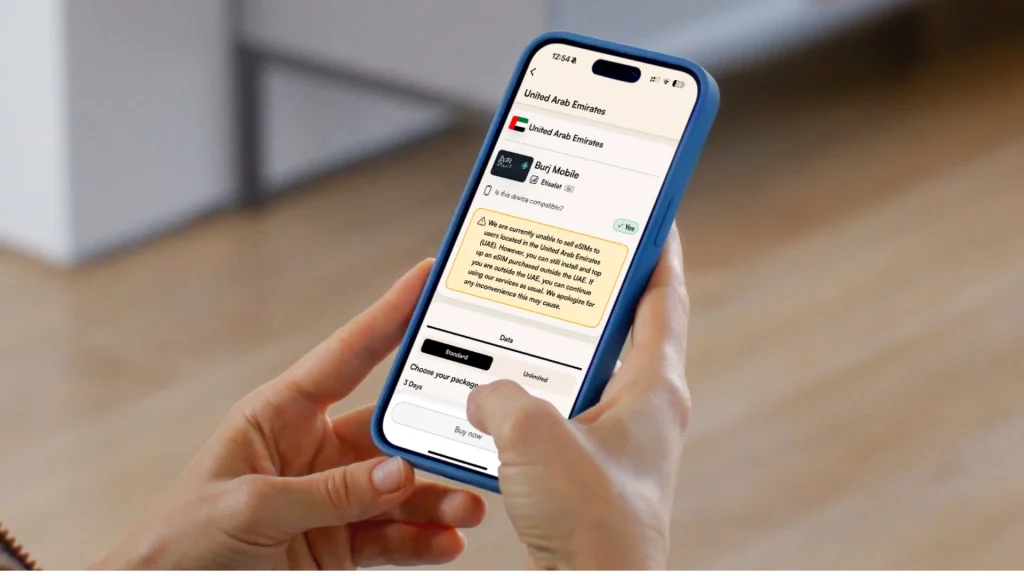
Heading to Dubai or Abu Dhabi and need an eSIM? We advise you to buy and install it before departure. Once you are in the Emirates, the selection is more limited, though still available.
To protect their own telecom companies, the sale of travel eSIMs to travelers already in the UAE is technically not permitted. This is difficult to enforce, so in practice, only a few large providers adhere to this ban (sales to consumers outside the UAE are not affected). This is a separate issue from the UAE’s more famous VoIP block, which also remains in effect.
- What is the restriction? A twofold issue: 1) A ban on selling eSIMs to travelers who are already in the country, and 2) a nationwide block on VoIP services like WhatsApp and FaceTime calls.
- Why? These are financial measures intended to protect the local telecom industry (both from eSIM competition and from lost revenue on international calls).
- What is the impact for travelers? Your data will work for maps and browsing, but you cannot make ‘free’ internet calls. Your options for buying an eSIM after arrival are also more limited.
- Our Advice: Buy and install your eSIM before you travel. If you need to make calls, be prepared to use a VPN to bypass the VoIP block.
If you are already in Dubai or Abu Dhabi and do not have an eSIM yet, you can use our comparison tool to find suitable plans or read our local UAE eSIM guide with tips and test results. You will need to click through to each provider to check whether their website is still accessible in the UAE, although in our experience the majority still work.
Oman
In Oman, at the time of writing (March 2026), the websites and apps of major providers like Airalo and Holafly are actively blocked. First reports of these restrictions surfaced in early December.
During a stay in december 2025, we have also observed that the websites of several other popular platforms, including Ubigi, Jetpac, Nomad, Saily, SimOptions, and MobiMatter, are often unreachable as well. In many cases, these sites simply fail to load entirely when accessed from within Oman.
It is important to emphasize that these issues relate purely to the accessibility of the providers’ websites and apps. This is a restriction on the websites and apps, not a reflection of the performance of the eSIM data service itself. During our tests with Airalo, we confirmed that once the eSIM is successfully installed, the data connection performs as expected.
- What is the restriction? Major eSIM provider websites and apps are either blocked or frequently fail to load, making it difficult to purchase a plan while in the country.
- Why? While not officially confirmed, this likely follows a regional pattern of regulating telecommunications to ensure all providers comply with local licensing and registration (KYC) laws.
- What is the impact for travelers? If your eSIM is already installed, your data verbinding should work fine. However, because many storefronts are unreachable, you will find it very difficult to buy a new plan after landing without a VPN.
- Our Advice: You must buy and install your eSIM before you depart for Oman.
Are you already in Oman? If you are already in the country and do not have an eSIM yet, we recommend using our Oman eSIM comparison tool. Based on our recent tests, we have found that around two-thirds of the providers in our comparison are still fully accessible. Alternatively, you can purchase a local eSIM from a carrier like Omantel or Ooredoo at the airport.
Kuwait
As of March 2026, the Kuwaiti government has implemented measures to restrict and/or prohibit the use of travel eSIMs. Several providers have been requested to cease the sale of eSIMs to travelers with immediate effect.
The underlying cause may be linked to the ongoing conflict between the US and Israel on one side, and Iran on the other. Iran has been deploying drones in retaliation, targeting countries such as Kuwait. It is understood that eSIMs can be utilised for drone navigation; however, whether this is the primary motivation remains a matter of speculation at this stage.
On 9 March, we observed the first instances of providers, such as Airalo, suspending eSIM sales to consumers.
Our current advice is to refrain from purchasing travel eSIMs for Kuwait and to opt for a local physical SIM card instead until there is further clarity on the situation.
The Bottom Line
The travel eSIM market is clearly maturing, and the era of operating completely under the radar is ending. Governments and regulators are catching up, driven by motives ranging from economic protection (Turkey) to national security (Russia, India) and legal compliance (Brazil).
For travelers, the ‘buy anywhere, connect anywhere’ dream is still very much alive, but it now comes with a critical new step: you must check the specific rules for your destination.
The advice to “buy and install your eSIM before you travel” is no longer just a tip for convenience; in many countries, it is now essential to ensure you get the best deal.
This article was originally published on November 16, 2025, and has been updated as of March 10, 2026.