

This site is reader-supported. When you buy through our links, we sometimes earn a commission from the provider — at no extra cost to you. In fact, you'll often get an exclusive discount. These partnerships fund our independent work, but never shape our conclusions. Learn more
Planning a trip to China? Then you're probably already aware that getting online there is quite a challenge. Whether you're wandering the streets of Beijing or taking in the Shanghai skyline, you just want to use your phone the way you normally would. From my own travels across China, I've learned one thing: don't gamble on a VPN. They tend to let you down at the worst possible moment.
With a travel eSIM for China, you bypass the 'Great Firewall' effortlessly. Because your data is routed through international servers, blocked services like Google, Instagram and Facebook simply work, no fuss. In my experience it's the most reliable way to stay connected, and it saves you from high roaming charges too.
Short on time? My personal favorite is Jetpac. It gave me a reliable connection even in remote areas like Yunnan. Use code FYESIM15 for 15% off your Jetpac eSIM.
How to Choose the Right eSIM for China?
Which eSIM is best for you depends on your travel plans. But the questions you most likely have are: "Can I keep using my email and socials as usual in China?" and "Do I need a VPN?"
The short answer: with a travel eSIM (like those from Jetpac, Airalo or Eskimo), you do not need a separate VPN for your mobile data in China. This works differently from the physical SIM cards you buy at a Chinese airport. Because a travel eSIM uses international roaming, your data travels through a 'digital tunnel' straight to servers abroad. That bypasses local blocks entirely, so apps like WhatsApp, Instagram and Google work exactly as you'd expect. I've personally tested at least 15 different eSIMs in China and never had any trouble with these blocks. Only Google Maps was inaccurate, but that's for an entirely different reason.
If you've decided to get an eSIM, here are a few tips from my own experience:
- Check your usage: Most travelers use about 10 GB a month. One thing to keep in mind: hotel Wi-Fi in China is censored, so you may lean on your mobile data more than usual. But if you use 10 GB a month at home, don't jump straight to an expensive unlimited plan, you can always top up. Use our data calculator to estimate what you'll really need.
- The 'unlimited' myth: Every unlimited eSIM for China has a Fair Use Policy. If a provider isn't transparent about its daily limit (say, 3 GB a day), be cautious. Look for one that's clear about its terms.
- Hotspotting: If you want to share data with travel companions or your laptop, be aware that some (unlimited) eSIMs block this. Check the fine print before you order.
A quick heads-up: some eSIM providers route your traffic through servers in Hong Kong. While the internet is unrestricted there, companies like ChatGPT and TikTok often block access from that region themselves. In those cases, those specific apps might still not work. If you want an eSIM that avoids this entirely, look at Eskimo or Jetpac.
Jetpac: Most reliable
Looking for the eSIM I trust most in China? Jetpac came out on top for me. Use code FYESIM15 for 15% off via Find Your eSIM.
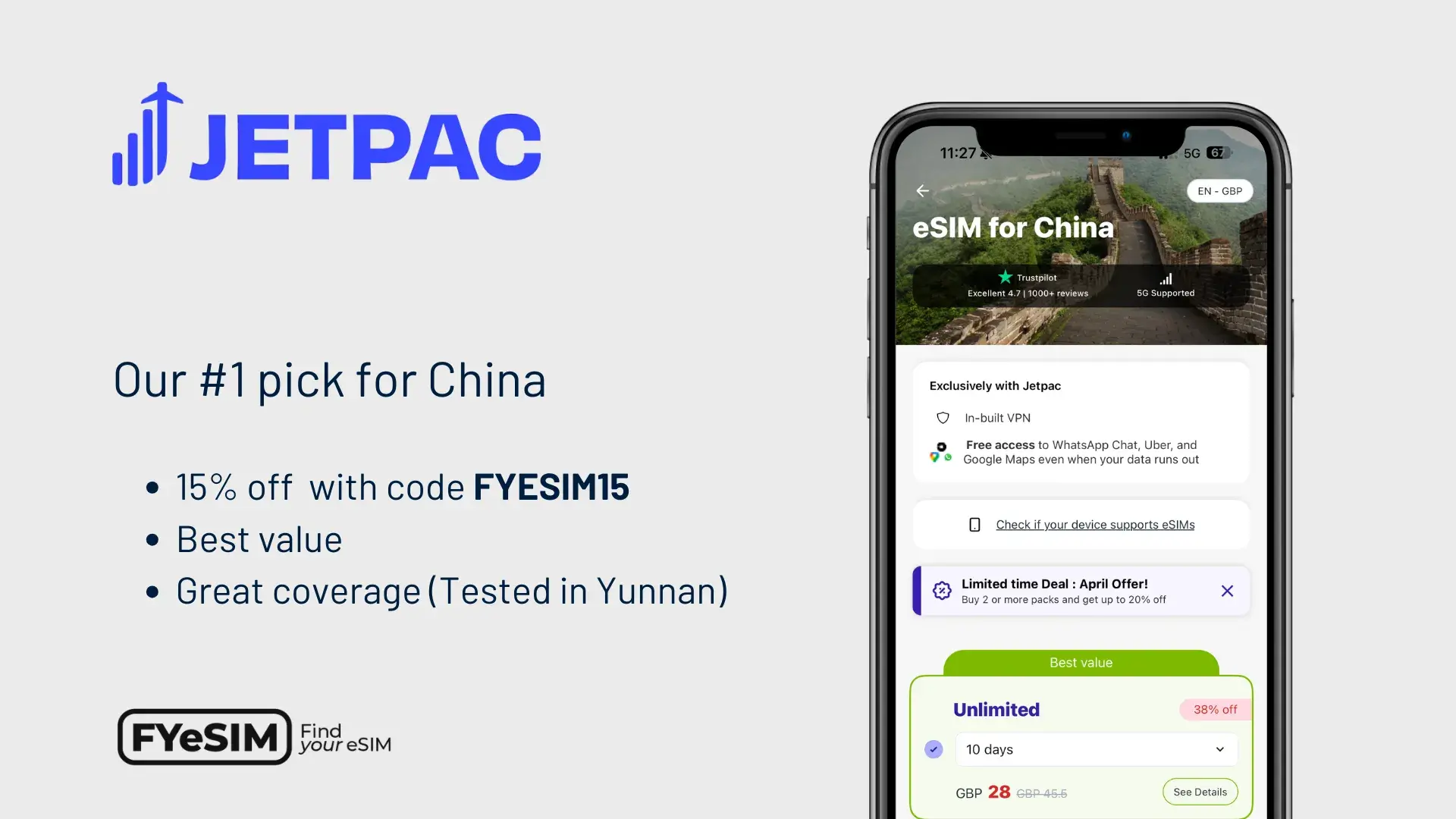
Jetpac consistently ranks high on my list. In China it was one of just two eSIMs that ticked every box: solid speeds, 5G support and reliable coverage, even in Yunnan (a region where many other providers were denied network access entirely). During my test, data was routed through Singapore, giving full, unrestricted access to all apps and websites and easily bypassing the Great Firewall. Speeds in urban areas topped 500 Mbps.
Some Jetpac eSIMs also work seamlessly across China, Hong Kong, Macao and Taiwan (a broader Asia-Pacific option is available too). It comes with handy travel perks as well: free airport lounge access if your flight is delayed, and discounted Fast Track at selected airports. Flight delays are surprisingly common in China, so that free lounge access can turn a long wait into a far more comfortable one.
Jetpac: Pros
- Reliable coverage, even in remote Yunnan where many providers failed
- Solid speeds (500+ Mbps in cities) with 5G support
- Routes via Singapore for full, unrestricted access
- Some plans cover China, Hong Kong, Macao and Taiwan
- Travel perks: free lounge access on delays and discounted Fast Track
Jetpac: Cons
- The Jetpac website can be blocked inside China, so buy and install before you fly
- Not the very cheapest option available
Featured Jetpac plans for China
-
 Jetpac China 10GBChina onlyData10 GBValidity7 days$13.00$11.05$1.11/GB$13.00$1.30/GB−15% with code
 - Jetpac China 30GBChina onlyData30 GBValidity30 days$29.99$25.49$0.85/GB$29.99$1.00/GB−15% with code
Eskimo: Free trial
Want to try an eSIM for free first? Then Eskimo is a great choice. Use code REISSIM to get 1 GB of free data across 100+ countries.
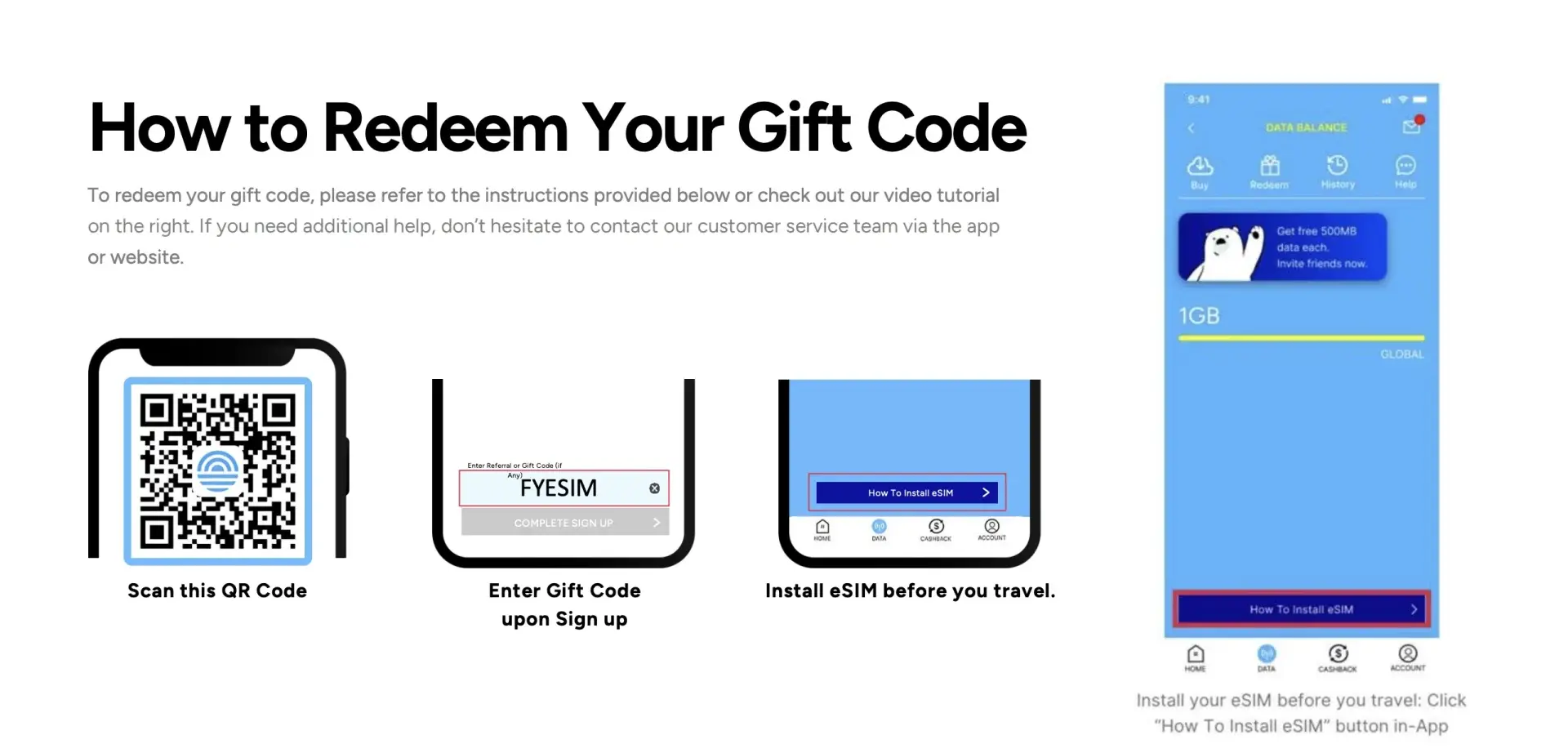
Eskimo is a Singapore-based provider with a strong option for China. It works in close partnership with Singaporean carrier Singtel, so in China it's like roaming on a Singaporean subscription: no trouble with blocks on social media or email. During my testing in Shenzhen I recorded speeds above 600 Mbps, on the China Telecom and China Unicom networks.
Eskimo also has a few unique perks: up to 50% off your first purchase and 10% off your second (as long as you used code REISSIM when signing up), most bundles are valid for a full 2 years, and you can transfer gigabytes straight to friends and family.
Eskimo: Pros
- Free 1 GB trial with code REISSIM (100+ countries)
- Up to 50% off your first purchase, 10% off your second
- Fast connection (600+ Mbps in Shenzhen) via China Telecom and China Unicom
- Most bundles are valid for 2 years
- Data sharing: transfer to friends and family, not just hotspot
Eskimo: Cons
- Routes via Singapore, slightly further afield than a Hong Kong route
Featured Eskimo plans for China
-
 Eskimo ChinaChina only5GData10 GBValidity2 years$23.90$11.95$1.19/GB$23.90$2.39/GB1 GB Free Trial + Up to 50% Off
 - Eskimo Asia Pacific31 countries5GData30 GBValidity2 years$79.90$64.90$2.16/GB$79.90$2.66/GB1 GB Free Trial + Up to 50% Off
MobiMatter: Best marketplace
MobiMatter is an eSIM marketplace and reseller for a range of providers. I've used it more than once for trips to China, Hong Kong and Macau. Prices are often very competitive, the app is intuitive, and you can choose from dozens of options from 1 GB to 50 GB. I don't have a standard discount code for MobiMatter, but with code FYESIM you get up to 50% cashback on your first purchase (up to $5 USD), which you can then use as a discount on future orders.
My recommendation: Three Hong Kong. An eSIM I've often bought through MobiMatter is the one from Three Hong Kong. It comes with an optional phone number. The only downside is that if you want to use it inside Hong Kong itself, you have to complete an ID verification process with Three. I managed it, but the process could be more user-friendly.
Transparency on IP routing. A great feature of MobiMatter is that it shows you the IP routing during checkout. If you see Hong Kong, the connection will likely be very fast thanks to its proximity, but some apps (like TikTok and AI apps) probably won't work, because those companies block access from Hong Kong themselves. If you see Singapore or Macau, the connection will also be excellent. If the routing is further away, the connection may feel slightly less snappy.
Featured MobiMatter plans for China
-
 MobiMatter RoamVault | ChinaChina only5GData10 GBValidity30 days$8.99$0.90/GB$8.99$0.90/GBUp to 50% cashback with code
 - MobiMatter RoamVault | ChinaChina only5GData50 GBValidity30 days$29.99$0.60/GB$29.99$0.60/GBUp to 50% cashback with code
Test Results
Below are the results of my tests. Bear in mind these are snapshots in time: providers can change partners or routing methods, and results vary depending on the specific plan you buy. As you can see, all listed providers managed to bypass local internet restrictions.
| Provider | Censorship | Routing |
|---|---|---|
| Airalo (Asialink) | No censorship. Google, WhatsApp and Instagram all worked normally. | Singapore (possibly now Hong Kong) |
| Airalo (Chinacom) | No censorship. Google, WhatsApp and Instagram all worked normally. | Singapore (possibly now Hong Kong) |
| Airhub (Global) | No censorship. Google, WhatsApp and Instagram all worked normally. | Poland |
| Breeze | No censorship. Google, WhatsApp and Instagram all worked normally. | UK and Singapore |
| eSIM4Travel | No censorship. Google, WhatsApp and Instagram all worked normally. | Poland |
| Eskimo | No censorship. Google, WhatsApp and Instagram all worked normally. | Singapore |
| Firsty | No censorship. Google, WhatsApp and Instagram all worked normally. | Singapore (possibly now Mauritius) |
| Holafly | No censorship. Google, WhatsApp and Instagram all worked normally. | Singapore |
| Instabridge | No censorship. Google, WhatsApp and Instagram all worked normally. | Poland |
| Jetpac (Asia) | No censorship. Google, WhatsApp and Instagram all worked normally. | Singapore |
| Maya Mobile | No censorship. Google, WhatsApp and Instagram all worked normally. | Singapore |
| Nomad | Limited. Bypassed the firewall, but Hong Kong routing means some apps (TikTok, AI tools) may still be blocked. | Hong Kong |
| Saily | Limited. Bypassed the firewall, but Hong Kong routing means some apps (TikTok, AI tools) may still be blocked. | UK or Hong Kong |
| Three HK (via MobiMatter) | Limited. Bypassed the firewall, but Hong Kong routing means some apps (TikTok, AI tools) may still be blocked. | Hong Kong |
| Truely | No censorship. Google, WhatsApp and Instagram all worked normally. | Singapore |
| Ubigi | No censorship. Google, WhatsApp and Instagram all worked normally. | South Korea |
| Voye Global | No censorship. Google, WhatsApp and Instagram all worked normally. | Singapore |
| Yesim | No censorship. Google, WhatsApp and Instagram all worked normally. | Poland and United Kingdom |
These are snapshots from my own testing in China (chiefly in and around Shenzhen). The focus here is censorship, not raw speed: the Censorship column shows whether each eSIM bypassed the Great Firewall, and Routing shows which country your data appeared to exit from. All listed providers got past local restrictions. Providers can change partners and routing at any time, so treat this as a guide, not a guarantee.
The Hard Truth: Most VPNs Fail in China
Many blogs recommend a VPN as the ultimate fix for the 'Great Firewall', but in my experience most standard VPN services simply don't work reliably in China. While I'm a fan of services like NordVPN (I use it myself) and ExpressVPN, China is a different beast. The Chinese government actively blocks IP addresses linked to known VPN servers. Even the providers themselves often admit on their support pages that their standard apps struggle to stay connected there.
My test: 0 out of 4 worked "out of the box". I tested the most popular VPNs on their default settings in Shenzhen: ExpressVPN, NordVPN, Hotspot Shield and Surfshark. Not a single one worked immediately on arrival. I eventually got NordVPN to connect, but only after significant manual configuration and troubleshooting. For the average traveler that's far too complex and frustrating.
You'll often come across articles claiming VPNs work effortlessly. Be cautious: these are frequently outdated or written purely to earn commissions. If you want the truth, check the VPN providers' own help pages or browse Reddit for user reports from the past week. In China, what worked yesterday can be blocked today.
My advice: if you want a guaranteed connection without the technical headache, choose a travel eSIM. Because your data is routed through an international server (roaming), you skip the struggle with unreliable VPNs entirely.
Local networks in China
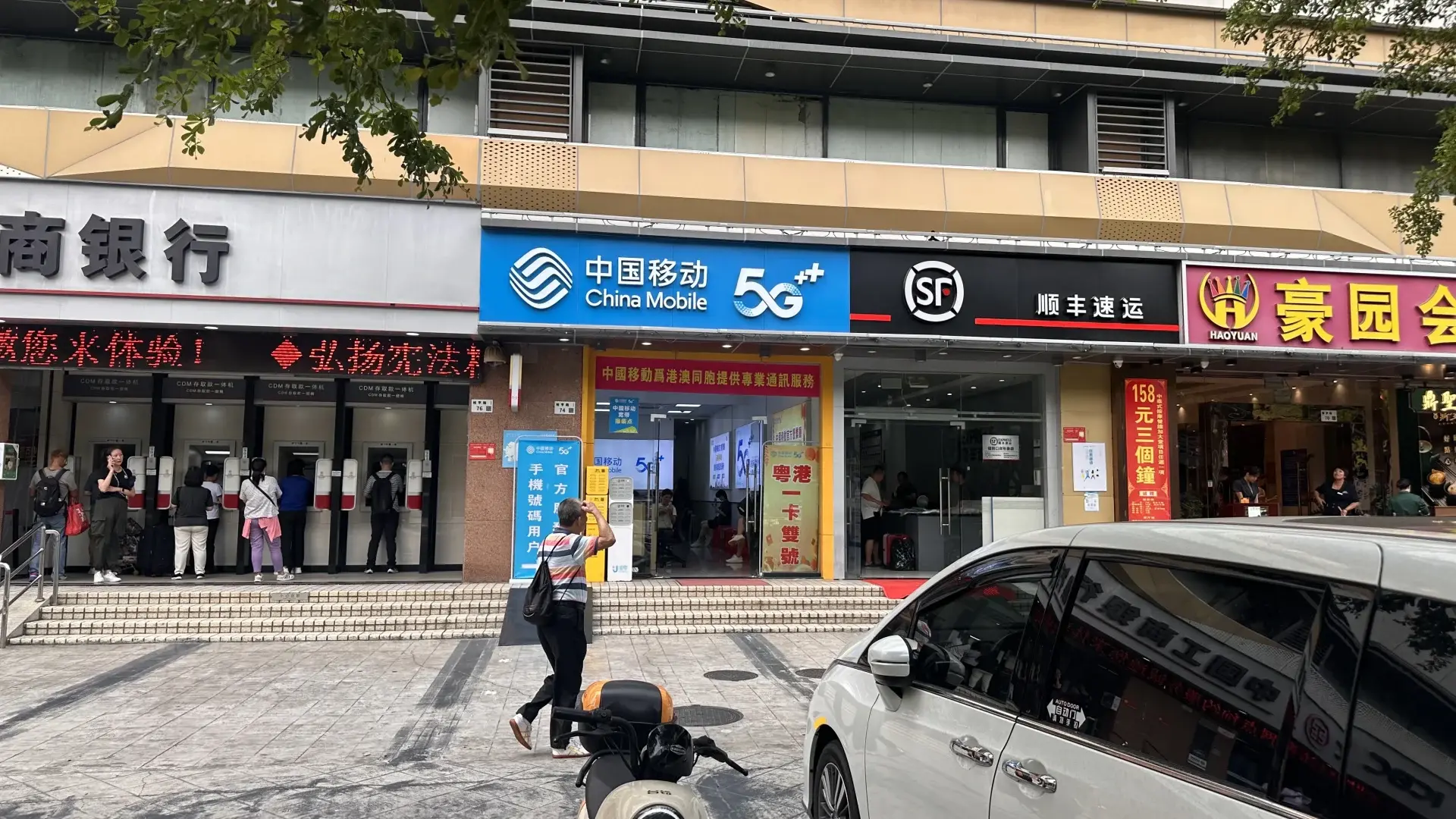
There are three major mobile operators in China:
- China Mobile
- China Unicom
- China Telecom
While locals often recommend China Mobile for its superior rural coverage, I've found that getting a local SIM from them as a tourist is a struggle thanks to strict ID verification and Chinese-language systems. That's why I prefer a travel eSIM. It automatically connects you to one or more of these networks, and in my experience your phone simply picks the strongest signal available. In cities, coverage is never an issue. If you're heading to remote provinces like Yunnan or Tibet, I'd check a tool like nPerf beforehand, but for most trips an eSIM handles network selection for you seamlessly.
Buying a local SIM card

Is your phone not eSIM-compatible, or are you too late to have a physical SIM delivered before your trip? Perhaps you're feeling adventurous and want to try a local Chinese SIM card. Most major airports offer plenty of options, but I'd stick to one of the three main providers. Ask a staff member to install the SIM for you, and make sure you're fully connected before you leave the shop, trying to work it out on your own later is not something I'd recommend.
That said, I don't recommend this route unless it's absolutely necessary. It can be time-consuming and confusing, and you'll still face the full restrictions of the Great Firewall once you're online. On my last visit to Shenzhen, I walked into an official China Unicom store to test the process myself. The SIM cost around $22. Thanks to a helpful member of staff I left with a fully working connection, though as expected many popular apps and websites were blocked. Surprisingly, WhatsApp did work on this local connection.
Not sure how to ask for a SIM card? Use a translation app, or simply show this message, which asks for a prepaid data SIM and help installing it:
我可以在这里购买一张中国境内使用的预付数据卡吗?你能帮我安装它吗
Practical Tips Before Traveling to China
Heading to China soon? Based on my travels, here are some essential internet-related tips to help you prepare:
- Activate your eSIM before arrival: I recommend doing this ahead of time with providers like Jetpac. Once you're in China, some eSIM provider websites may be blocked by the Great Firewall.
- Set up WeChat before your trip: It's an essential app in China, you might even need it just to access airport Wi-Fi. Not ideal for privacy, but widely used and often necessary for daily life.
- Use WeChat or Alipay for payments: Cash is becoming rare and many places no longer accept physical Renminbi. International cards are often declined. Since 2023 you can link your international credit card to both WeChat and Alipay to pay like a local.
- Install a reliable maps app in advance: Apple Maps works well for iPhone users. On Android, avoid Google Maps as the location data is often inaccurate (due to a different GPS frequency used in China). Install an alternative like Maps.me instead.
- Install one or two backup browsers: Alongside Chrome, it's smart to have Firefox or Microsoft Edge on your phone or laptop. They tend to work more reliably in China.
- Using Gmail or Google Workspace? Set up email forwarding: Forward your messages to a Hotmail or Outlook address, or use a different mail app, to avoid losing access while you're in China.
- Be careful with VPNs: Don't buy an expensive VPN subscription unless you've seen very recent, clear instructions for using it inside China. Most VPNs don't work out of the box.
China is a fascinating and generally safe country that's well worth visiting. Don't let connectivity worries stop you: just be aware that internet access works differently there. A bit of preparation goes a long way.
Final thoughts
Still not sure which eSIM to choose? Let's quickly recap the best options from my tests, so you can pick with confidence. Here are my top picks for mobile data in China:
- Jetpac (reliable coverage + travel perks)
- Eskimo (free trial + plans valid for 2 years)
- MobiMatter (best marketplace)
From my travels across China, I've learned one key lesson: don't rely on a VPN. An eSIM is the easiest way to keep access to all your apps from back home. Or compare 45+ providers yourself using our China eSIM comparison tool, and you'll stay connected without overpaying for roaming.

Founder of Find Your eSIM. An avid traveller with roots in telecom, he works fully remote and has been hands-on testing travel eSIMs since 2023. He only recommends providers he'd use himself.